AI Enabled Pharmacovigilance
Smarter Pharmacovigilance Through Intelligent AutomationAutomation Made Easy
ICSR Automation
ICSR processing automation uses AI to streamline the collection, processing, and analysis of adverse event reports in pharmacovigilance. This tech-driven approach enhances efficiency, accuracy, and speed in identifying potential safety issues with pharmaceutical products.
-
Omnivigilance
Our solution can process ICSR for Medicinal Products, Medical Devices, Cosmetics and Nutritional Products. -
Multilingul Support
Our Technology can handle multiple languages and multiple geograhies. -
Automated Data Extraction
AI-powered algorithms extract relevant information from various sources, such as PDFs, emails, and forms, reducing manual data entry errors. -
Case Assessment and Triage
AI-driven systems assess the validity and seriousness of ICSRs, enabling prioritization of cases requiring immediate attention.
-
Standardization and Coding
AI applies standardized MedDRA/WHO-DD Term Mapping and classifies cases according to predefined criteria, ensuring consistency and accuracy. -
Regulatory Reporting
The platform can generate E2B R2/R3 XML formats to submit various dafety databases and various geographies. -
Regulatory Compliance
AI-powered ICSR automation ensures compliance with global regulatory requirements, such as those set by the FDA, EMA, and ICH.
Signal Management Automation
Signal Management automation in pharmacovigilance utilizes AI to identify, validate, and prioritize potential safety signals from large datasets, enabling proactive risk management and informed decision-making.
-
Signal Detection
AI-powered algorithms analyze vast amounts of data from various sources, including ICSRs, literature, and social media, to identify potential safety signals. -
Data Mining
AI-driven data mining techniques, such as statistical analysis and machine learning, uncover hidden patterns and relationships in data. -
Signal Validation
AI-assisted signal validation processes evaluate the strength of evidence, clinical relevance, and potential impact on patient safety.
-
Signal Prioritization
AI-driven prioritization frameworks assess signal severity, frequency, and causality, enabling focus on high-priority signals. -
Automated Signal Management
AI automates signal management workflows, streamlining the signal detection, validation, and prioritization process. -
Enhanced Sensitivity and Specificity
AI-powered signal detection improves sensitivity and specificity, reducing false positives and false negatives.
Aggregate Reporting Automation
Aggregate Reporting automation in pharmacovigilance utilizes AI to streamline the collection, analysis, and submission of aggregate safety data, enabling efficient and accurate reporting to regulatory agencies.
-
Automated Data Aggregation
AI-powered algorithms collect and aggregate safety data from various sources, including ICSRs, clinical trials, and post-marketing surveillance. -
Data Analysis and Signal Detection
AI-driven analytics identify trends, patterns, and potential safety signals in aggregate data, supporting informed decision-making. -
Report Generation
AI automates the generation of aggregate reports, such as PSURs (Periodic Safety Update Reports) and PBRERs (Periodic Benefit-Risk Evaluation Reports).
-
Standardization and Formatting
AI ensures compliance with regulatory requirements and guidelines, applying standardized formats and templates for aggregate reports. -
Data Quality and Integrity
AI-powered data validation and verification processes ensure the accuracy, completeness, and consistency of aggregate safety data. -
Regulatory Compliance
AI-driven aggregate reporting automation ensures compliance with global regulatory requirements, such as those set by the FDA, EMA, and ICH.
Literature Monitoring Automation
Automated Literature Monitoring: AI-powered algorithms search Global/Local literature databases, identifying relevant articles and publications related to specific products or compounds.
-
Article Screening and Triage
AI-driven screening processes evaluate article relevance, prioritizing those requiring further review and assessment. -
Relevant Information Extraction
AI extracts relevant safety information from articles, including adverse events, product details, and study outcomes. -
Case Identification and Assessment
AI identifies potential cases and assesses their relevance and seriousness, supporting further evaluation and reporting.
-
Standardized Review Process
AI ensures consistency and standardization in literature review processes, applying predefined criteria and guidelines. -
Improved Efficiency and Productivity
Automation minimizes manual processing time, allowing pharmacovigilance teams to focus on higher-value tasks and improving overall productivity. -
Regulatory Compliance
AI-driven literature search and review automation ensures compliance with global regulatory requirements and guidelines.
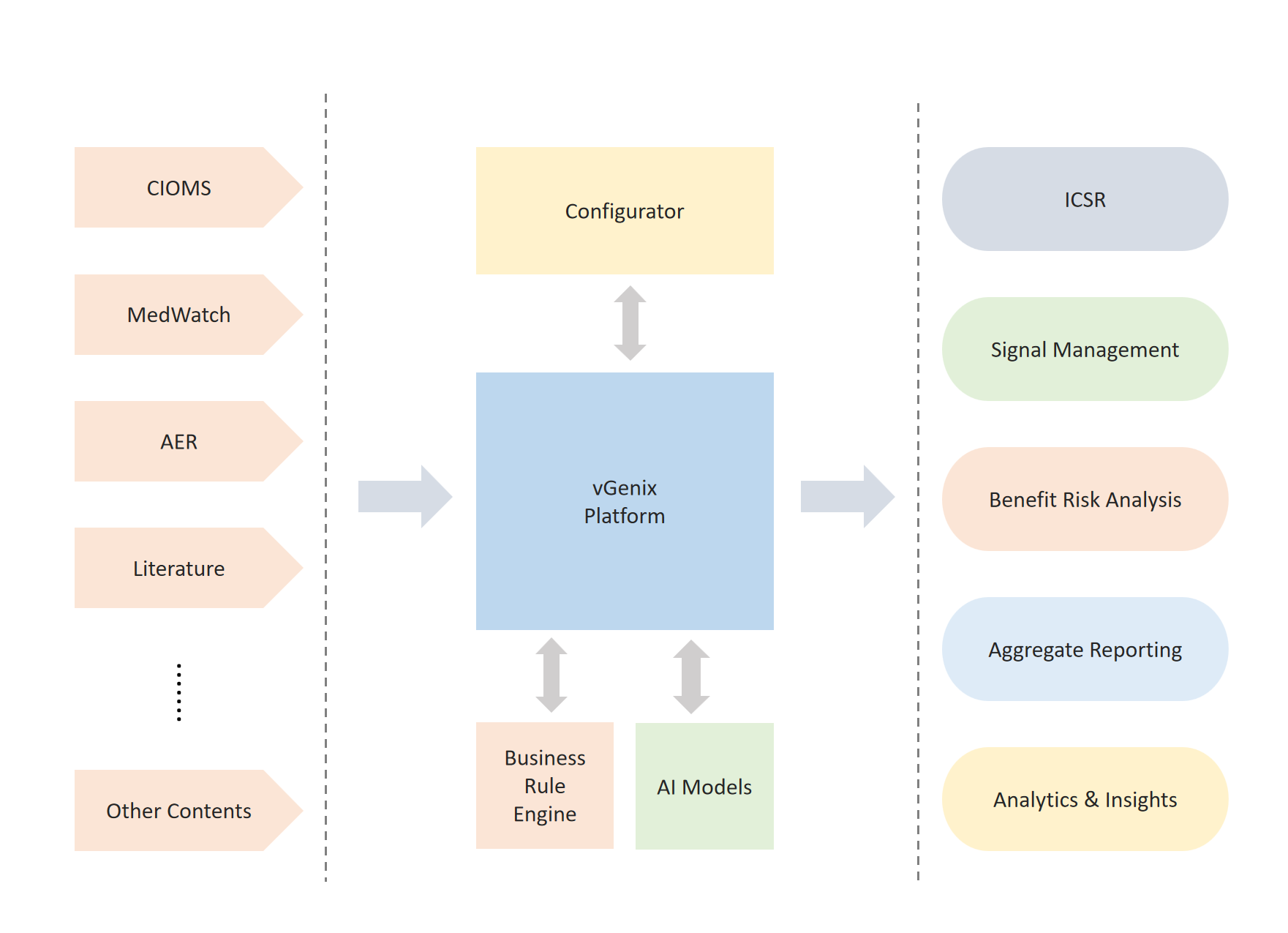
Pharmacovigilance: Ensuring Medication Safety
Pharmacovigilance is the science and activities related to the detection, assessment, understanding, and prevention of adverse effects or any other drug-related problems. This includes monitoring the safety of medications, vaccines, and medical devices to ensure their benefits outweigh the risks.
Importance of Pharmacovigilance
Pharmacovigilance plays a critical role in protecting public health by:
- Identifying potential safety concerns: Pharmacovigilance involves monitoring and analyzing adverse event reports to identify potential safety concerns associated with medications.
- Analyzing and evaluating adverse event reports: Pharmacovigilance teams assess the causality of adverse events and evaluate the risk-benefit profile of medications.
- Implementing risk management strategies: Based on the analysis and evaluation of adverse event reports, pharmacovigilance teams develop and implement risk management strategies to minimize harm.
- Educating healthcare professionals and patients: Pharmacovigilance teams provide safety updates and alerts to healthcare professionals and patients, ensuring they have the latest information on medication safety.
- Continuously monitoring and updating safety profiles: Pharmacovigilance involves ongoing monitoring of medication safety, ensuring that safety profiles are updated and reflect the latest evidence.

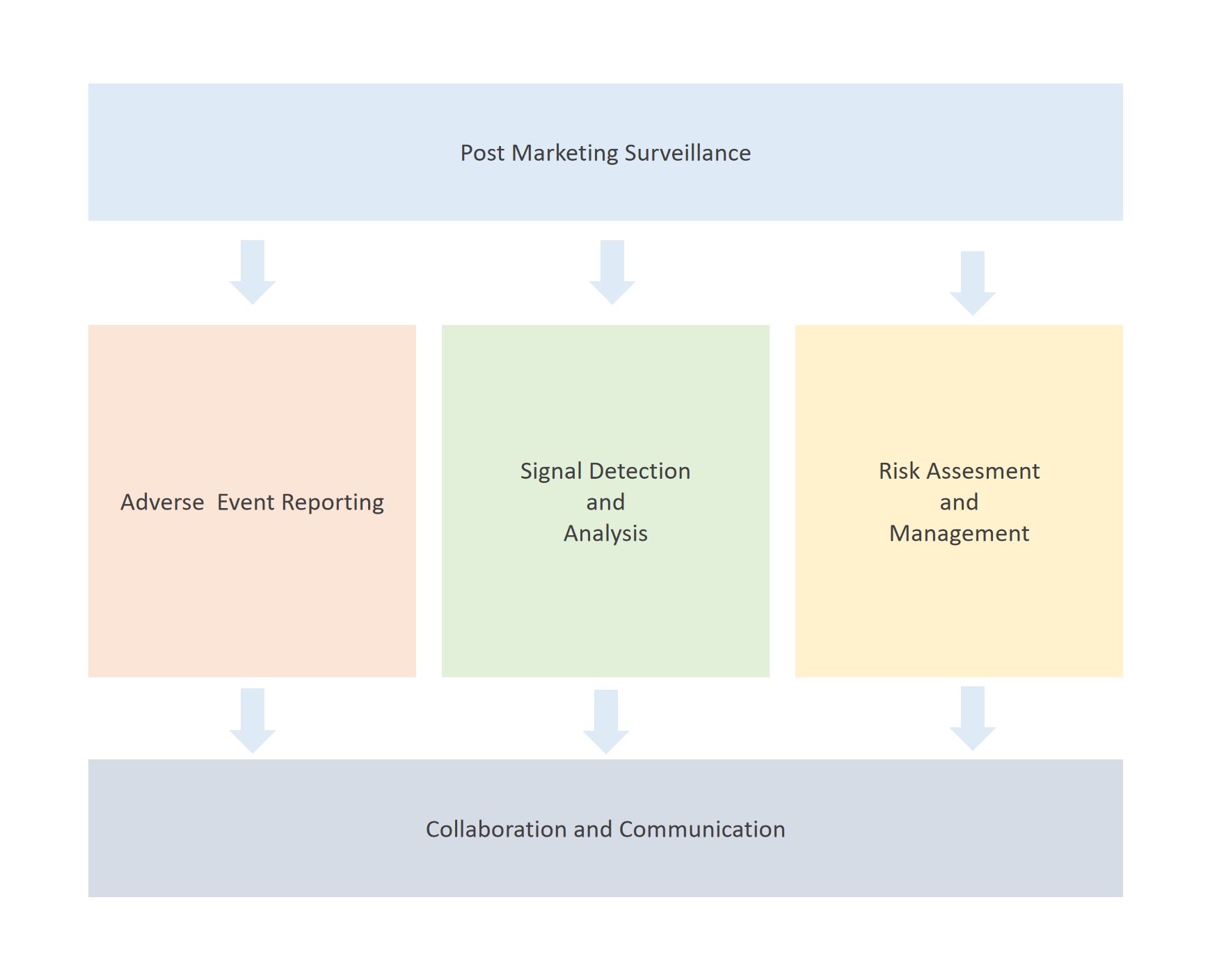
Pharmacovigilance Activities
Our pharmacovigilance activities include:
- Collecting and analyzing adverse event reports: We collect adverse event reports from various sources, including healthcare professionals, patients, and regulatory agencies. Our team analyzes these reports to identify potential safety concerns.
- Conducting signal detection and risk assessment: We use advanced statistical methods to detect signals and assess the risk associated with medications.
- Developing and implementing risk management plans: Based on the analysis and evaluation of adverse event reports, we develop and implement risk management plans to minimize harm.
- Collaborating with regulatory agencies and industry partners: We collaborate with regulatory agencies and industry partners to share knowledge, best practices, and safety information.
- Providing safety updates and alerts: We provide safety updates and alerts to healthcare professionals and patients, ensuring they have the latest information on medication safety.
Benefits of Pharmacovigilance
Effective pharmacovigilance benefits:
- Healthcare professionals: By providing them with accurate and up-to-date safety information.
- Patients: By ensuring their safety and well-being.
- Pharmaceutical companies: By helping them identify and mitigate potential safety risks.
- Regulatory agencies: By informing policy decisions and regulatory actions.
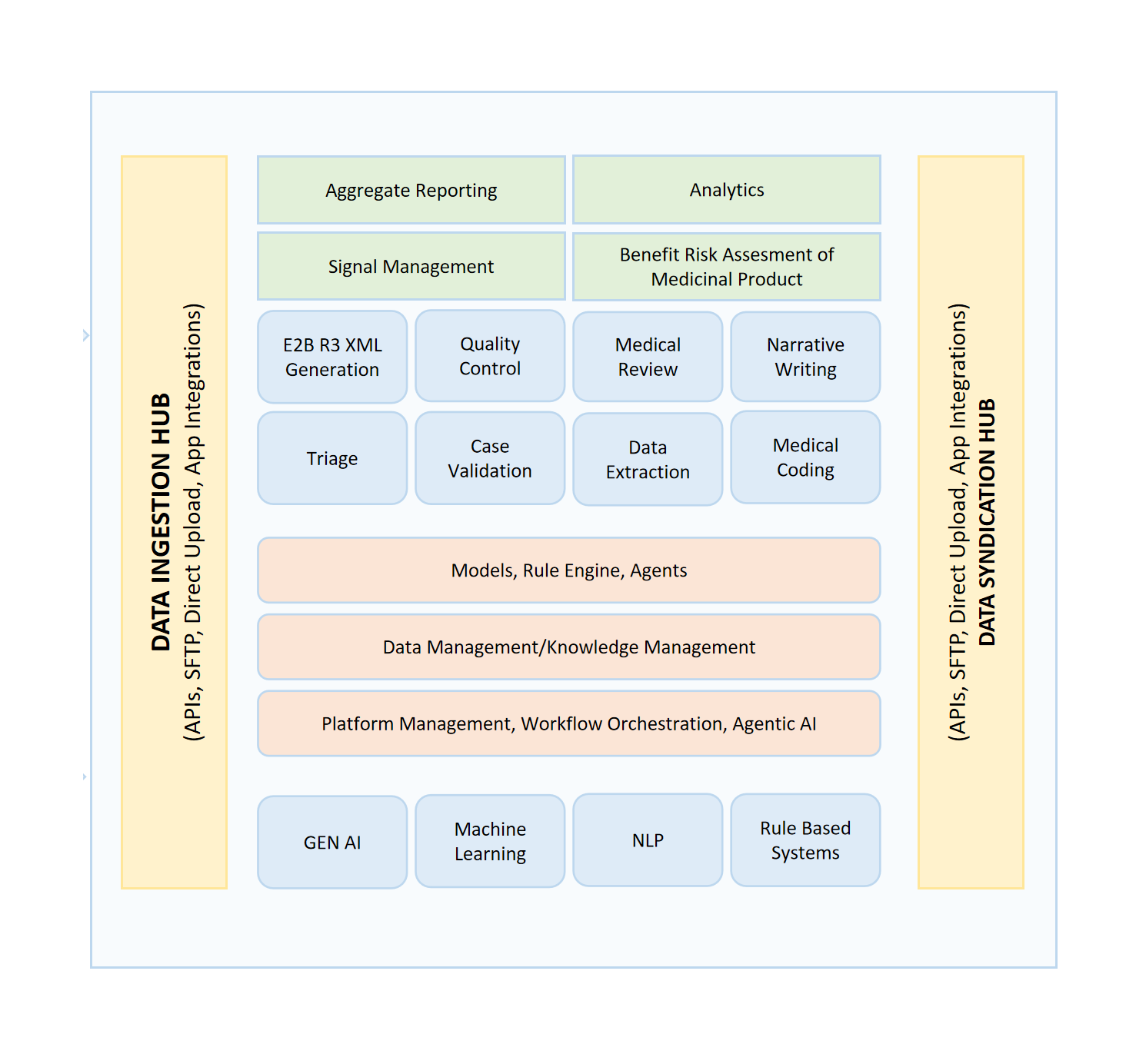
Pharmacovigilance Automation using AI
We leverage artificial intelligence (AI) and machine learning (ML) to enhance our pharmacovigilance activities, including:
- Automated adverse event detection: Our AI-powered system detects adverse events from various sources, including social media, electronic health records, and literature.
- Intelligent signal detection: Our AI algorithm identifies potential safety signals and prioritizes them for further evaluation.
- Risk assessment and predictive modeling: Our ML models predict the likelihood of adverse events and identify potential risk factors.
- Automated case processing: Our AI system automates case processing, including data entry, coding, and narrative generation.
- Real-time monitoring and alerting: Our system provides real-time monitoring and alerting, enabling rapid detection and response to emerging safety issues.
Benefits of Pharmacovigilance Automation
Pharmacovigilance automation using AI and ML offers several benefits, including:
Improved Efficiency
Automation reduces manual effort and increases processing speed.
Enhanced Accuracy
AI and ML algorithms improve the accuracy of adverse event detection and signal detection.
Increased Sensitivity
Automation enables the detection of subtle safety signals that may be missed by manual review.
Real-time Monitoring
Automation enables real-time monitoring and alerting, enabling rapid response to emerging safety issues.
Seamless Integrations. Smarter Safety.
Seamlessly connect with leading pharmacovigilance systems and data formats
 Oracle Argus
 ARISg
ARISg
 Veeva Vault
 Excel & CSV
 E2B R3 XML
 Databases
Benefits
AI First Approach
We prioritize the use of Artificial Intelligence (AI) in every aspect of our products and services.
End-To-End Automation
Streamlined workflows through complete automation, reducing errors and increasing productivity without any manual touch.
Faster Onboarding
Accelerating the client onboarding process through streamlined workflows, automation, and standardized procedures.
Accuracy Guarantee
High-accuracy guarantee: 95% and above precision in every deliverable.
Cost Effective
Our cost-effective solution streamlines processes, reduces costs, boosts efficiency, and is tailored to your specific needs.
Build For Your Needs
Our approach lets you customize our solutions to fit your unique customer requirements.
Ready to streamline your Pharma Operation?
Start your free trial today