Pharma Intelligence
Turning Adverse Events Into Actionable Pharma Intelligence
Key Technologies
Our platform utilizes a range of cutting-edge technologies, including:
-
Artificial Intelligence (AI):
Our platform uses AI to analyze documents, identify patterns, and make predictions.
-
Machine Learning (ML):
Our ML algorithms continuously learn and improve document processing accuracy.
-
Agentic AI:
Agentic AI enables autonomous decision-making and action-taking, further streamlining document processing workflows.
-
Large Language Models (LLMs):
LLMs provide advanced language understanding and generation capabilities, enhancing document analysis and processing.
-
Optical Character Recognition (OCR):
Our OCR technology extracts text from scanned or photographed documents.
-
Natural Language Processing (NLP):
Our NLP capabilities understand document context and extract relevant information.
-
Robotic Process Automation (RPA):
RPA automates repetitive tasks, reducing manual effort and increasing efficiency.
-
Rule-Based Systems:
Using predefined rules to automate document classification, data extraction, and validation, based on specific document structures, content, or metadata.
How Pharma Intelligence Works
Our Pharma Intelligence solution uses advanced technologies to:
-
Extract Adverse Events:
Automatically extract adverse events from various forms, including:
- CIOMS (Council for International Organizations of Medical Sciences) forms.
- MedWatch forms.
- E2B (Electronic Standard for the Transfer of Regulatory Information) forms.
- Other forms and documents.
- Analyze and Validate Data: Analyze and validate the extracted data to ensure accuracy and completeness.
- Generate Output: Generate output in the required format for further analysis and submission to regulatory authorities.
Document Classification
Our Intelligent Document Classification system leverages advanced machine learning to accurately categorize incoming ICSR forms into its corresponding classes to ensure seamless processing without any manual effort. Various different classification models can be built based on our cutting edge technology.
Features
- No manual touch
- 100% Classification Accuracy
- Works for all standard data sources out of the box
- Quickly adopt the new formats easily
- Trainable with few examples
- Hybrid approach
- Faster
- Triage and Processing
- Accurate Document Routing
- Fully Automated

Information Extraction
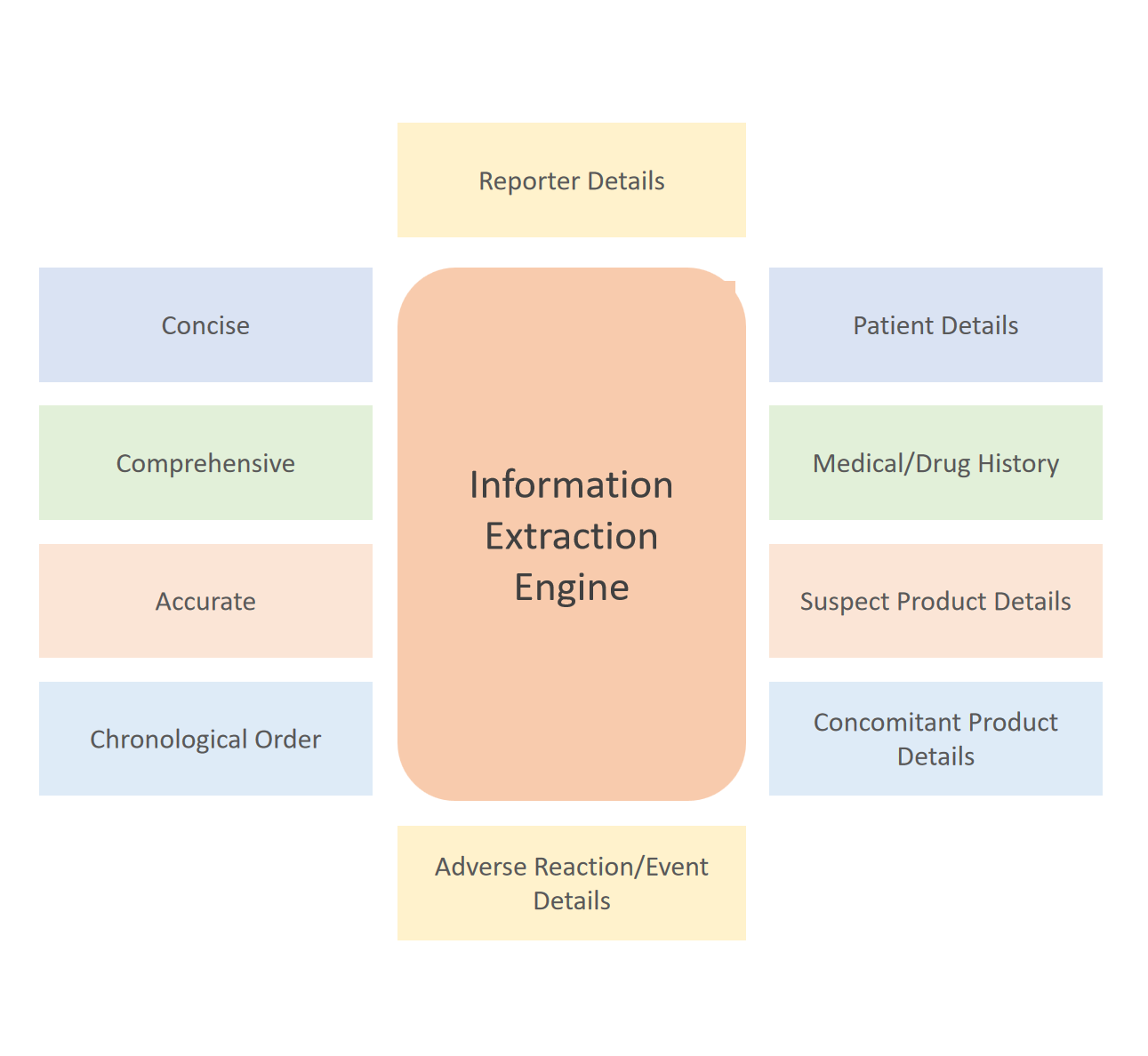
Our AI-powered Extraction engine reads, understands, and transforms raw pharmacovigilance documents into structured, compliant data—ready for downstream processing and reporting. We are not only extract the data, we standardize, contextualize and validate it for high accuracy.
General Information
- Source of report (e.g., MAH, CRO, Affiliate)
- Report type (spontaneous, literature, solicited)
- Regulatory authority, submission details
- Reporter qualification (HCP, Consumer)
Patient Information
- Age, gender, weight, ethnicity
- Patient identifiers (initials, ID)
- Medical history, relevant tests/labs
Product Information
- Suspect and concomitant drugs
- Dosage, route, frequency, therapy dates
- Indication for use, batch/lot numbers
Event Information
- Adverse event terms and descriptions
- Seriousness criteria and outcome
- Event onset date, duration, resolution
- Causality and dechallenge/rechallenge results
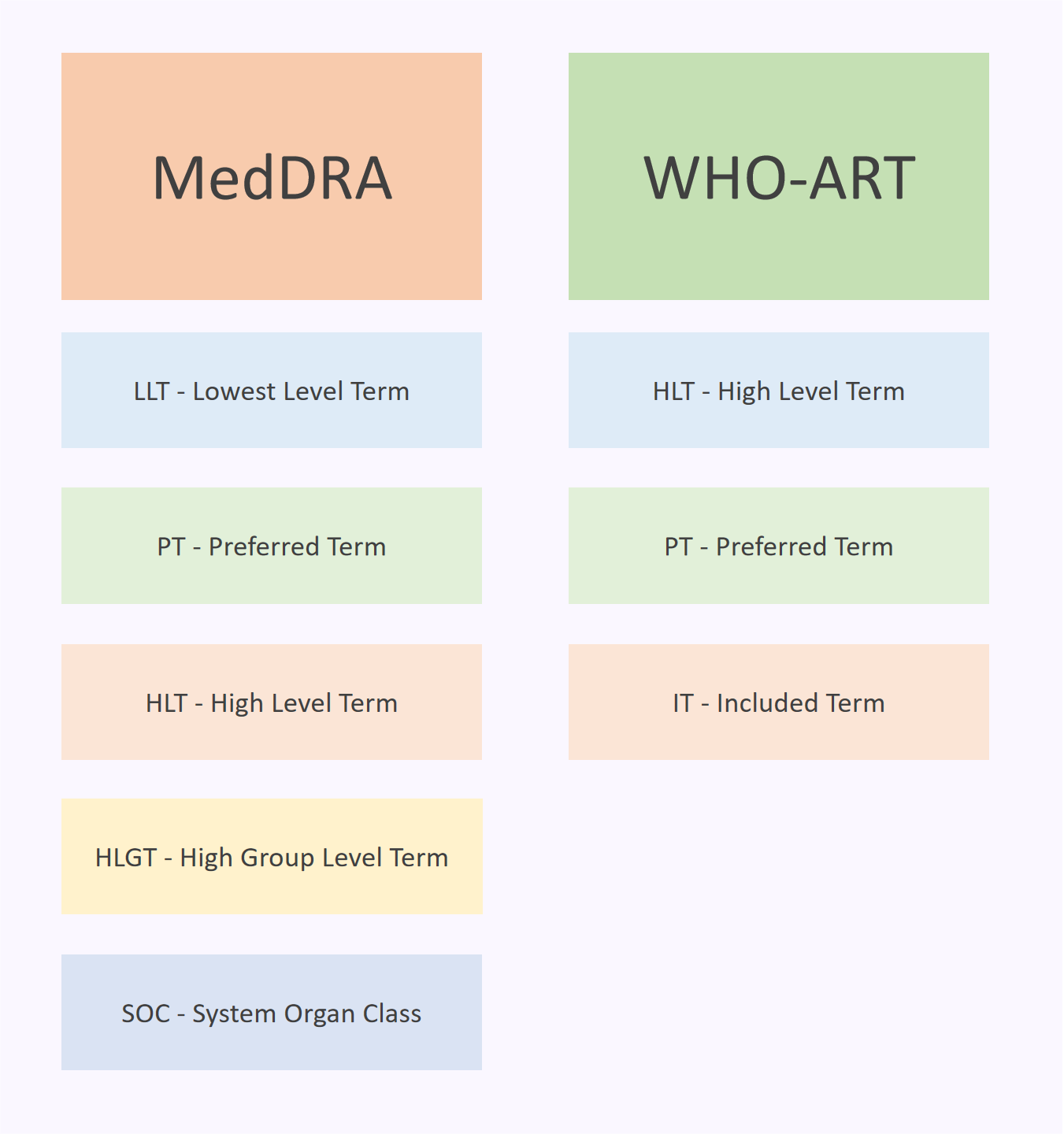
MedDRA/WHO-DD Term Mapping
MedDRA/WHO-DD Term Mapping plays a crucial role in pharmacovigilance by ensuring the accurate and standardized classification of Adverse Drug Reactions (ADRs) and other medical events. MedDRA/WHO-DD Term Mapping provides the structured framework for recording and analyzing ADRs. This enables, Facilitating Data Analysis, Identification of Safety Signals, Regulatory Reporting Promoting Data Sharing.
- Facilitating Data Analysis
- Identification of Safety Signals
- Regulatory Reporting
- Promoting Data Sharing Coding Systems:
-
LLT (Lowest Level Term)
- The most specific MedDRA term.
-
PT (Preferred Term)
- Standardized term used for analysis and reporting.
WHO-DD (World Health Organization Drug Dictionary)
- Used for coding adverse drug reactions and other medical conditions in pharmacovigilance, particularly in the context of WHO activities.
MedDRA (Medical Dictionary for Regulatory Activities) A standardized hierarchical system for classifying medical conditions, adverse events, and other pharma terms, used globally for regulatory reporting and data analysis in healthcare.
Narrative Summary
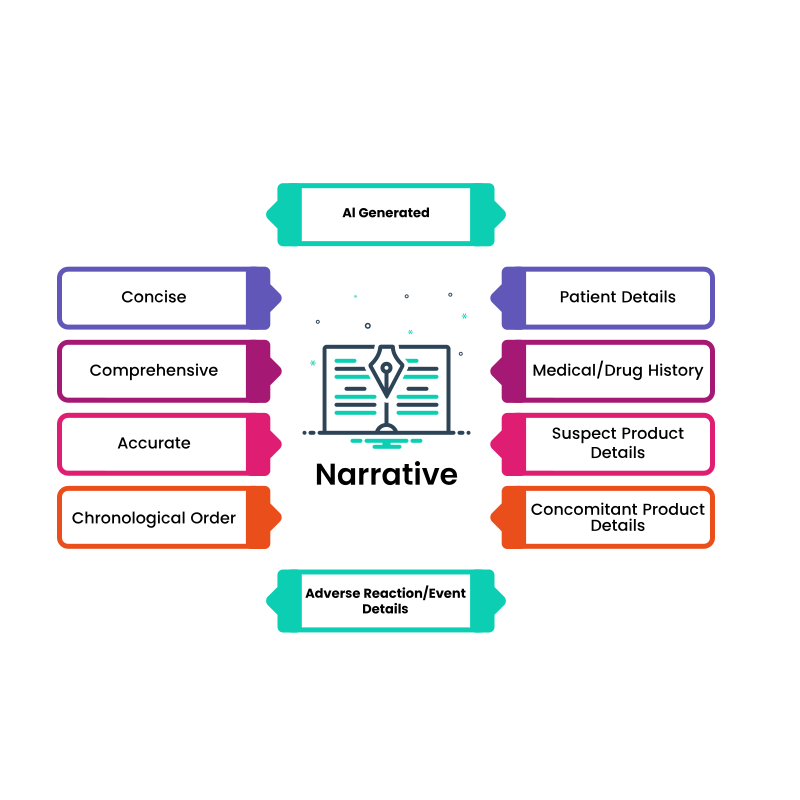
A Narrative is a brief summary of specific events experienced by patients, during the course of a clinical trial. Narrative writing involves multiple activities such as generation of patient profiles, review of data sources, and identification of events for which narratives are required.
- Supports both Extractive and Descriptive Summaries
- Template based Narrative summary
- AI Based Narrative summary
- Highly Configurable
- Supports various templates for various cases and regulatories
E2B R3 XML Generation
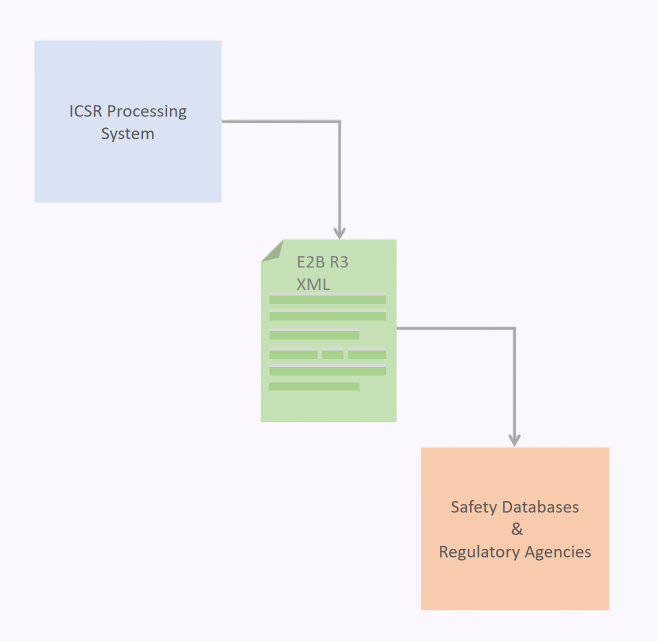
E2B(R3) XML files serve as a standardized format for transmitting safety information, allowing for the efficient and accurate exchange of ICSRs. vGenix Ai offer features for generating and managing E2B(R3) XML files.
- Data Mapping: vGenix Ai maps case data to create E2B(R3) XML files, ensuring compliance with the standard.
- Regional Differences: While the E2B(R3) standard provides a core structure, regional variations and additional data elements may be included, as per the requirements of specific regulatory agencies like EMA and FDA vGenix Ai handles all the regional and custom mappings.
- Testing and Validation: Before submitting E2B(R3) files to regulatory agencies, it's crucial to test and validate them to ensure compliance with the E2B(R3) standard and regional requirement.
- Batch Processing: Our platform supports batch export of E2B(R3) reports, allowing multiple ICSRs to be included in a single XML file.
- Data Integrity: When generating E2B(R3) XML files, we ensure the accuracy and completeness of the data, paying attention to mandatory elements and data coding against standard terminologies.
Benefits of Pharma Intelligence in Adverse Event Extraction
- Faster Signal Detection: Identify potential safety signals more quickly, enabling proactive risk management.
- Improved Compliance: Ensure compliance with regulatory requirements and industry standards.
- Reduced Costs: Minimize the costs associated with manual adverse event extraction.
- Enhanced Patient Safety: Prioritize patient safety by identifying and mitigating potential safety risks.
Features of Our Pharma Intelligence Solution
Advanced NLP Algorithms
Utilize advanced NLP algorithms to extract adverse events from unstructured text.
Form-Agnostic
Extract adverse events from various forms and documents.
Customizable Output
Generate output in the required format for further analysis and submission to regulatory authorities.
Real-time Analytics
Provide real-time analytics and insights to support proactive risk management.
Seamless Integrations. Smarter Safety.
Seamlessly connect with leading pharmacovigilance systems and data formats
 Oracle Argus
 ARISg
ARISg
 Veeva Vault
 Excel & CSV
 E2B R3 XML
 Databases
Benefits
AI First Approach
We prioritize the use of Artificial Intelligence (AI) in every aspect of our products and services.
End-To-End Automation
Streamlined workflows through complete automation, reducing errors and increasing productivity without any manual touch.
Faster Onboarding
Accelerating the client onboarding process through streamlined workflows, automation, and standardized procedures.
Accuracy Guarantee
High-accuracy guarantee: 95% and above precision in every deliverable.
Cost Effective
Our cost-effective solution streamlines processes, reduces costs, boosts efficiency, and is tailored to your specific needs.
Build For Your Needs
Our approach lets you customize our solutions to fit your unique customer requirements.
Ready to streamline your Pharma Operation?
Start your free trial today