AI Enabled Medical Device Vigilance
Revolutionizing Medical Device Vigilance with AIAutomation Made Easy
ICSR Automation
ICSR processing automation uses AI to streamline the collection, processing, and analysis of adverse event reports in pharmacovigilance. This tech-driven approach enhances efficiency, accuracy, and speed in identifying potential safety issues with pharmaceutical products.
-
Omnivigilance
Our solution can process ICSR for Medicinal Products, Medical Devices, Cosmetics and Nutritional Products. -
Multilingul Support
Our Technology can handle multiple languages and multiple geograhies. -
Automated Data Extraction
AI-powered algorithms extract relevant information from various sources, such as PDFs, emails, and forms, reducing manual data entry errors. -
Case Assessment and Triage
AI-driven systems assess the validity and seriousness of ICSRs, enabling prioritization of cases requiring immediate attention.
-
Standardization and Coding
AI applies standardized MedDRA/WHO-DD Term Mapping and classifies cases according to predefined criteria, ensuring consistency and accuracy. -
Regulatory Reporting
The platform can generate E2B R2/R3 XML formats to submit various dafety databases and various geographies. -
Regulatory Compliance
AI-powered ICSR automation ensures compliance with global regulatory requirements, such as those set by the FDA, EMA, and ICH.
Signal Management Automation
Signal Management automation in pharmacovigilance utilizes AI to identify, validate, and prioritize potential safety signals from large datasets, enabling proactive risk management and informed decision-making.
-
Signal Detection
AI-powered algorithms analyze vast amounts of data from various sources, including ICSRs, literature, and social media, to identify potential safety signals. -
Data Mining
AI-driven data mining techniques, such as statistical analysis and machine learning, uncover hidden patterns and relationships in data. -
Signal Validation
AI-assisted signal validation processes evaluate the strength of evidence, clinical relevance, and potential impact on patient safety.
-
Signal Prioritization
AI-driven prioritization frameworks assess signal severity, frequency, and causality, enabling focus on high-priority signals. -
Automated Signal Management
AI automates signal management workflows, streamlining the signal detection, validation, and prioritization process. -
Enhanced Sensitivity and Specificity
AI-powered signal detection improves sensitivity and specificity, reducing false positives and false negatives.
Aggregate Reporting Automation
Aggregate Reporting automation in pharmacovigilance utilizes AI to streamline the collection, analysis, and submission of aggregate safety data, enabling efficient and accurate reporting to regulatory agencies.
-
Automated Data Aggregation
AI-powered algorithms collect and aggregate safety data from various sources, including ICSRs, clinical trials, and post-marketing surveillance. -
Data Analysis and Signal Detection
AI-driven analytics identify trends, patterns, and potential safety signals in aggregate data, supporting informed decision-making. -
Report Generation
AI automates the generation of aggregate reports, such as PSURs (Periodic Safety Update Reports) and PBRERs (Periodic Benefit-Risk Evaluation Reports).
-
Standardization and Formatting
AI ensures compliance with regulatory requirements and guidelines, applying standardized formats and templates for aggregate reports. -
Data Quality and Integrity
AI-powered data validation and verification processes ensure the accuracy, completeness, and consistency of aggregate safety data. -
Regulatory Compliance
AI-driven aggregate reporting automation ensures compliance with global regulatory requirements, such as those set by the FDA, EMA, and ICH.
Literature Monitoring Automation
Automated Literature Monitoring: AI-powered algorithms search Global/Local literature databases, identifying relevant articles and publications related to specific products or compounds.
-
Article Screening and Triage
AI-driven screening processes evaluate article relevance, prioritizing those requiring further review and assessment. -
Relevant Information Extraction
AI extracts relevant safety information from articles, including adverse events, product details, and study outcomes. -
Case Identification and Assessment
AI identifies potential cases and assesses their relevance and seriousness, supporting further evaluation and reporting.
-
Standardized Review Process
AI ensures consistency and standardization in literature review processes, applying predefined criteria and guidelines. -
Improved Efficiency and Productivity
Automation minimizes manual processing time, allowing pharmacovigilance teams to focus on higher-value tasks and improving overall productivity. -
Regulatory Compliance
AI-driven literature search and review automation ensures compliance with global regulatory requirements and guidelines.

Medical Device Vigilance
Medical device vigilance is a critical component of pharmacovigilance that focuses on monitoring and managing the safety of medical devices. It involves collecting, analyzing, and acting on data related to adverse events, near misses, and other safety concerns associated with medical devices.
- Ensuring patient safety: Identify and mitigate potential safety risks associated with medical devices to protect patients and users.
- Improving device safety: Gather and analyze data to inform device design, manufacturing, and usage improvements.
- Regulatory compliance: Meet regulatory requirements and standards for medical device vigilance, such as reporting adverse events and implementing corrective actions.
Key Activities in Medical Device Vigilance
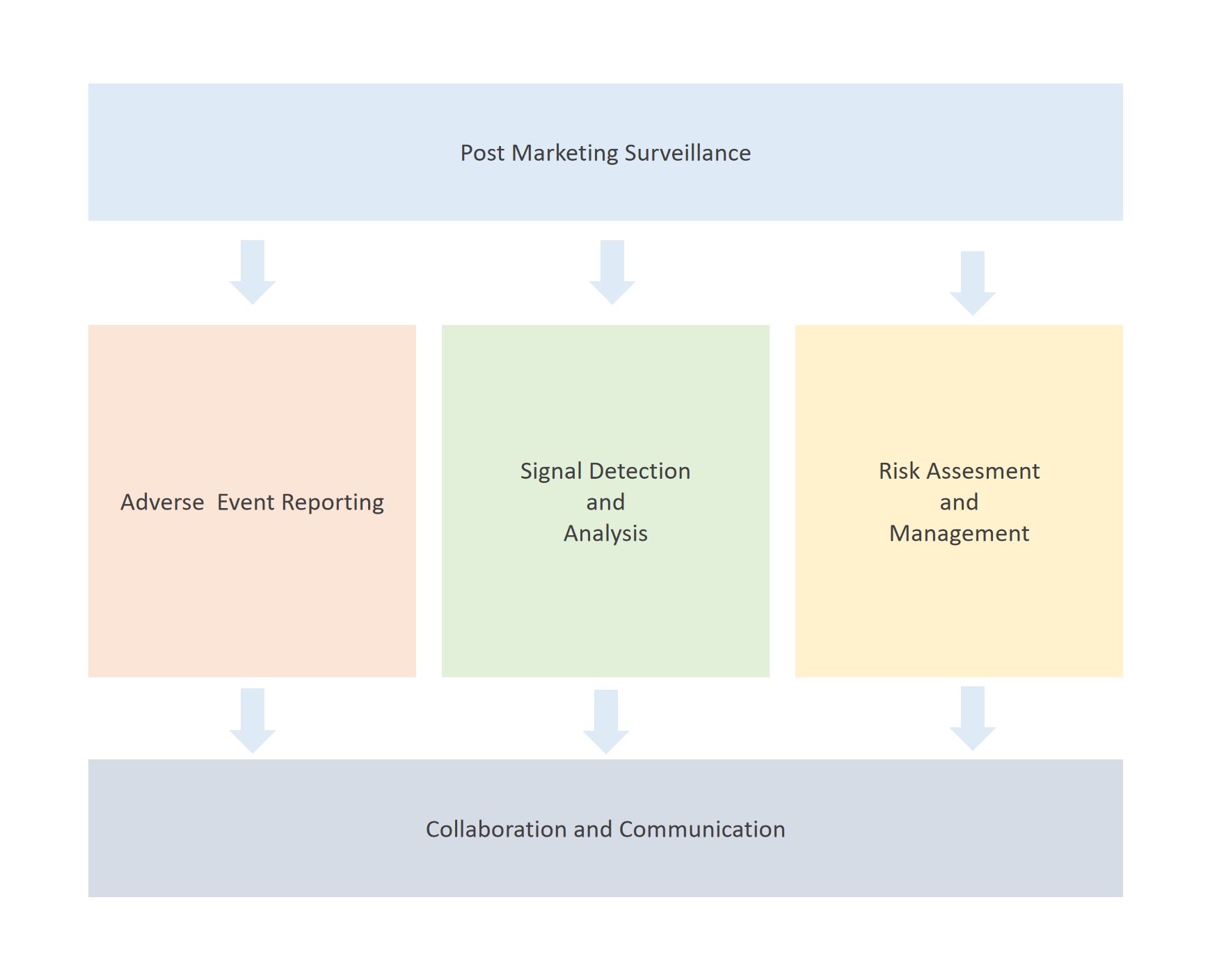
- Adverse event reporting: Collect and report adverse events, near misses, and other safety concerns related to medical devices.
- Signal detection and analysis: Identify and analyze trends and patterns in adverse event data to detect potential safety signals.
- Risk assessment and management: Assess and manage risks associated with medical devices, including implementing corrective actions and field safety notices.
- Post-market surveillance: Monitor medical device performance in real-world settings to identify potential safety concerns.
- Collaboration and communication: Collaborate with stakeholders, including regulatory agencies, manufacturers, and healthcare professionals, to share safety information and best practices.
Challenges and Opportunities
Complexity of Medical
Devices
The increasing complexity of medical devices requires sophisticated vigilance systems.
Data Quality and Integration
Ensuring high-quality data and integrating data from various sources can be challenging.
Globalization and Regulatory Harmonization
Navigating diverse regulatory requirements and promoting harmonization can facilitate medical device vigilance.
Best Practices for Medical Device Vigilance
- Establish a robust vigilance system: Implement a comprehensive system for collecting, analyzing, and acting on safety data.
- Foster a culture of safety: Encourage a culture of safety among stakeholders, including healthcare professionals and patients.
- Collaborate and share information: Share safety information and best practices with stakeholders to promote collective learning and improvement.
- Stay up-to-date with regulatory requirements: Monitor and comply with evolving regulatory requirements and standards.
Best Benefits of Medical Device Vigilance
- Enhanced patient safety: Timely identification and mitigation of safety risks protect patients and users.
- Improved device design and manufacturing: Data-driven insights inform device improvements, reducing the risk of adverse events.
- Regulatory compliance: Meeting regulatory requirements helps avoid reputational damage and financial penalties.
- Increased transparency and trust: Open communication about safety concerns and actions taken fosters trust among stakeholders.
Seamless Integrations. Smarter Safety.
Seamlessly connect with leading pharmacovigilance systems and data formats
 Oracle Argus
 ARISg
ARISg
 Veeva Vault
 Excel & CSV
 E2B R3 XML
 Databases
Benefits
AI First Approach
We prioritize the use of Artificial Intelligence (AI) in every aspect of our products and services.
End-To-End Automation
Streamlined workflows through complete automation, reducing errors and increasing productivity without any manual touch.
Faster Onboarding
Accelerating the client onboarding process through streamlined workflows, automation, and standardized procedures.
Accuracy Guarantee
High-accuracy guarantee: 95% and above precision in every deliverable.
Cost Effective
Our cost-effective solution streamlines processes, reduces costs, boosts efficiency, and is tailored to your specific needs.
Build For Your Needs
Our approach lets you customize our solutions to fit your unique customer requirements.
Ready to streamline your Pharma Operation?
Start your free trial today