Automating Aggregate Reporting
Transforming aggregate reporting workflow with AI-powered automation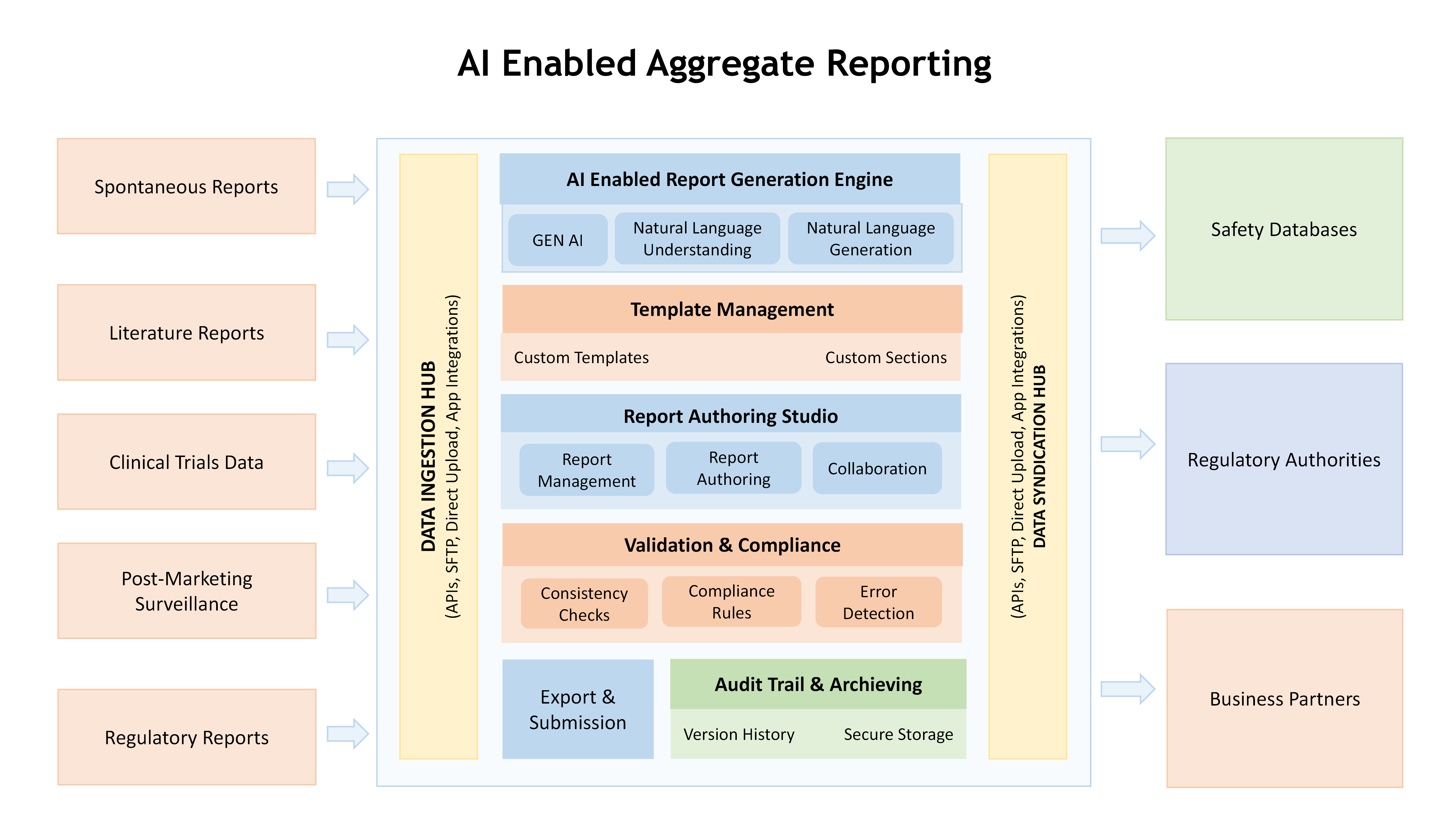
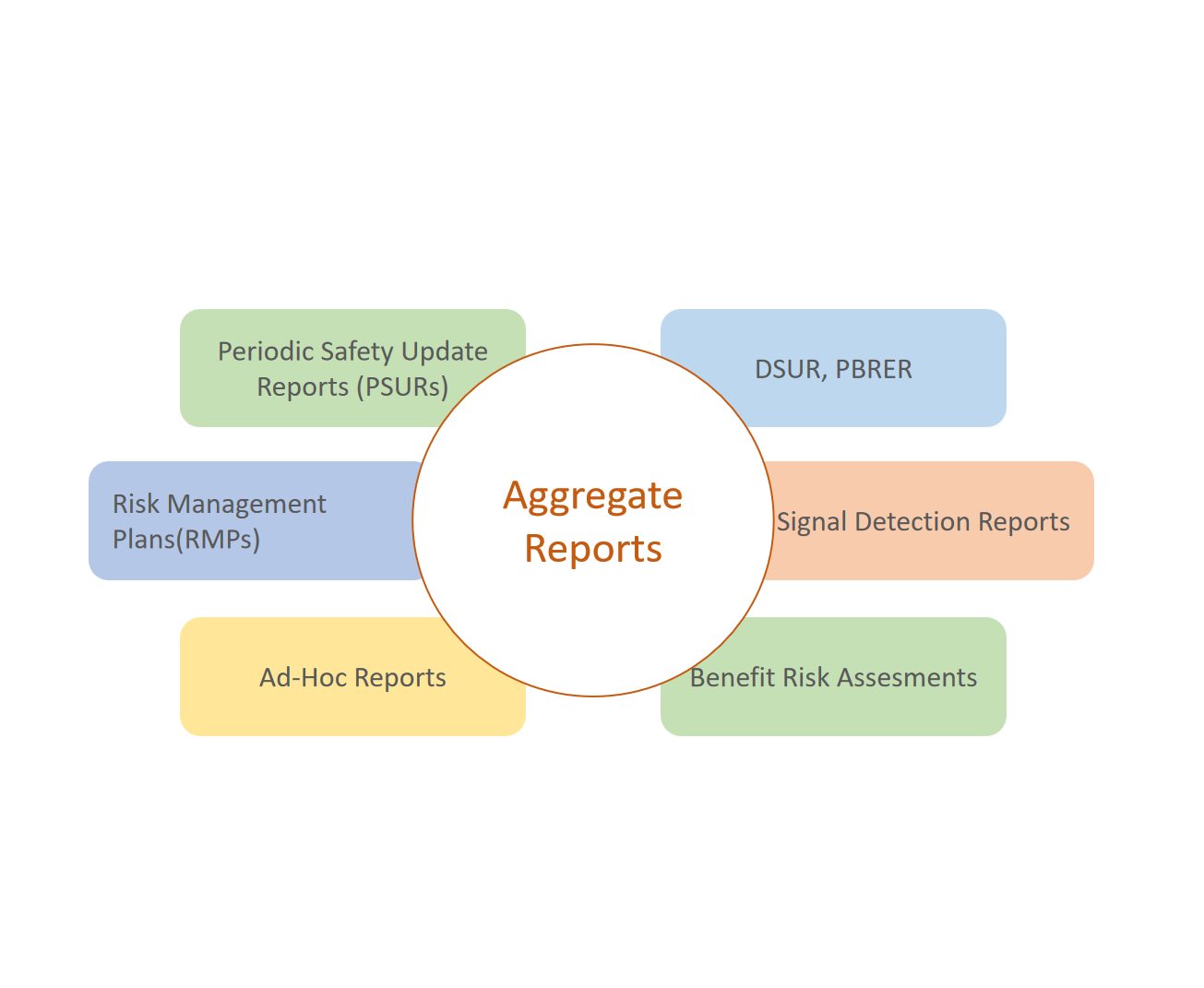
Aggregate Reporting
Aggregate reporting involves the periodic submission of safety data from clinical trials, post-marketing surveillance, and other sources. The data is analyzed to identify trends, patterns, and potential safety signals that may impact the benefit-risk profile of a medicinal product.
- Over the lifecycle of a product, cumulative or ‘aggregated’ safety information is gathered into reports on a periodic basis over time and submitted to National Competent Authorities.
- Aggregated reports are based on ICH guidelines and enable an understanding of the Benefit-risk profile of a product, and how that changes over time as more real world data becomes available at different development and post-marketing stages.
- We can prepare all SAE line listings, Bi-Annual SUSAR Line Listings, Frequency Tabulations, and Trend Reports, as applicable. We can also propose additional solutions and customizable reports to fit your requirements.
- Throughout development, and for Marketing Authorization Holders, aggregate reports demonstrate the ongoing monitoring and assessment of the Benefit-risk profile of products, and can identify any new risks over time. Progress notes, consultation notes, and operative reports.
Aggregate Report Types
- Periodic Safety Update Reports (PSURs): Submitted at regular intervals (e.g., every 6 months) to update the safety profile of a medicinal product. PSURs provide a comprehensive overview of the safety data, including adverse event reports, and help identify potential safety concerns.
- Development Safety Update Reports (DSURs): Submitted annually to update the safety profile of a medicinal product during its development phase. DSURs focus on the safety data from clinical trials and provide insights into the safety profile of the product.
- Periodic Adverse Drug Experience Reports (PADERs) are reports: Submitted by marketing authorization holders to regulatory agencies regarding adverse drug reactions. These reports help in ongoing safety evaluation of drugs post-marketing approval.
- Periodic Benefit-Risk Evaluation Reports (PBRERs): Documents that evaluate the benefit-risk profile of a drug. They are submitted by marketing authorization holders to regulatory agencies at specified intervals. PBRERs help in assessing the continued safety and efficacy of a drug in its post-marketing phase.
- Pooled Analysis Reports: Involves combining data from multiple studies to identify potential safety concerns. Pooled analysis reports help identify rare adverse events or safety signals that may not be apparent in individual studies.
-
Natural Language Processing (NLP):
Our NLP capabilities understand document context and extract relevant information.
Challenges in Aggregate Reporting
Data Management
Aggregate reporting involves managing large volumes of safety data from various sources, which can be time-consuming and resource-intensive.
Signal Detection
Identifying potential safety signals from the data requires expertise and robust analytical methods.
Regulatory Compliance
Aggregate reporting is subject to various regulatory requirements, and non-compliance can result in penalties and reputational damage.

Automating Aggregate Reporting with AI
Artificial intelligence (AI) can help automate aggregate reporting by:
- Data Extraction: AI-powered tools can extract relevant safety data from various sources, including electronic health records, clinical trial databases, and spontaneous reporting systems.
- Data Analysis: AI algorithms can analyze large volumes of safety data to identify potential safety signals, trends, and patterns.
- Report Generation: AI-powered tools can generate aggregate reports, including PSURs and DSURs, by integrating data from various sources and applying regulatory guidelines.
- Signal Detection: AI-powered signal detection tools can identify potential safety signals and alert pharmacovigilance teams to investigate further.
Benefits of AI-Powered Aggregate Reporting
Our platform utilizes a range of cutting-edge technologies, including:
-
Increased Efficiency:
AI-powered automation can reduce the time and resources required for aggregate reporting.
-
Improved Accuracy:
AI algorithms can analyze large volumes of data accurately and identify potential safety signals that may be missed by human reviewers.
-
Enhanced Regulatory Compliance:
AI-powered tools can ensure compliance with regulatory requirements by applying guidelines and templates consistently.
-
Data Quality and Integrity:
AI will ensure accurate and complete data collection, analysis, processing and submission.
-
Timely Submission:
AI helps the organization to submit aggregate reports within regulatory deadlines to avoid delays and potential penalties.
-
Signal Detection and Management:
AI helps to automate signal detection and management processes to identify and investigate potential safety concerns.
Seamless Integrations. Smarter Safety.
Seamlessly connect with leading pharmacovigilance systems and data formats
 Oracle Argus
 ARISg
ARISg
 Veeva Vault
 Excel & CSV
 E2B R3 XML
 Databases
Benefits
AI First Approach
We prioritize the use of Artificial Intelligence (AI) in every aspect of our products and services.
End-To-End Automation
Streamlined workflows through complete automation, reducing errors and increasing productivity without any manual touch.
Faster Onboarding
Accelerating the client onboarding process through streamlined workflows, automation, and standardized procedures.
Accuracy Guarantee
High-accuracy guarantee: 95% and above precision in every deliverable.
Cost Effective
Our cost-effective solution streamlines processes, reduces costs, boosts efficiency, and is tailored to your specific needs.
Build For Your Needs
Our approach lets you customize our solutions to fit your unique customer requirements.
Ready to streamline your Pharma Operation?
Start your free trial today